Bigger image version / Große, 100% Bild-Version (4400 x 2949 pixel)
[back]
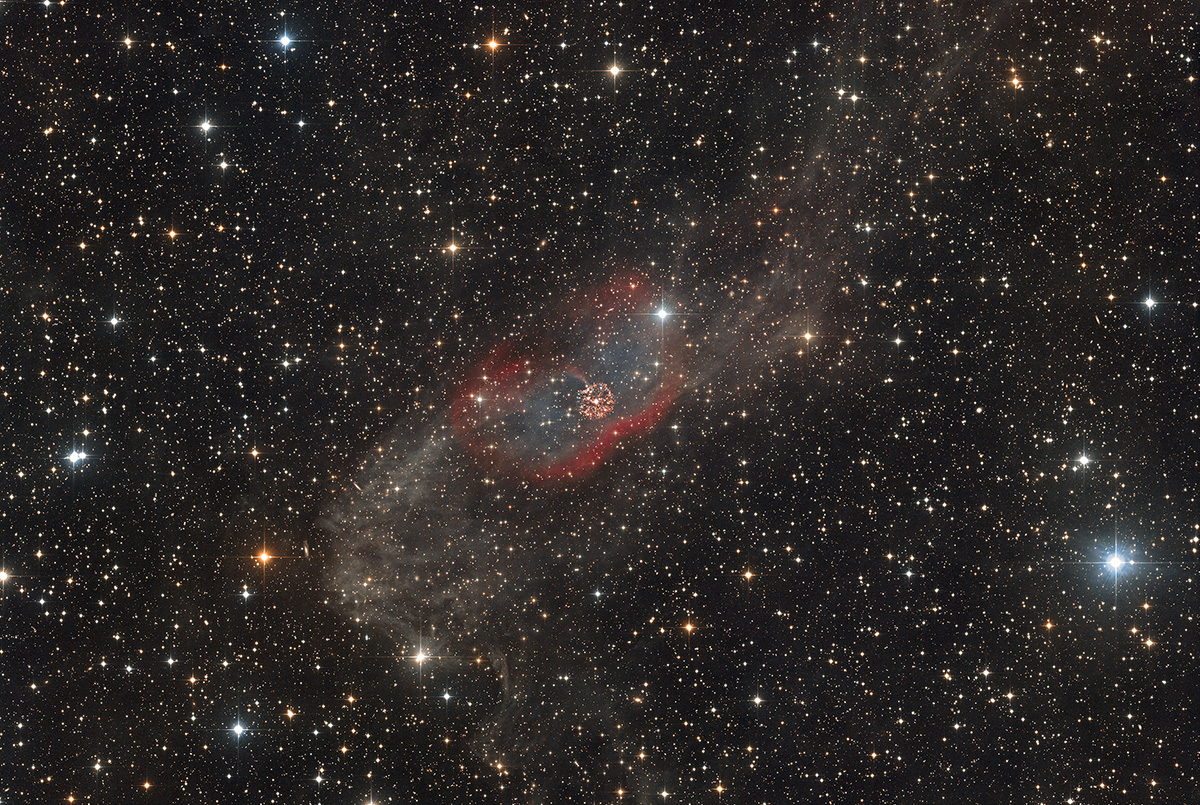
GK Persei (Nova Persei 1901) in Perseus
Bigger
image version / Große, 100% Bild-Version (4400 x 2949
pixel)
|
(c) 2026 All astro photo images are copyrighted. They may not be used or reproduced without explicit written permission from the authors. |
|
300" |
|
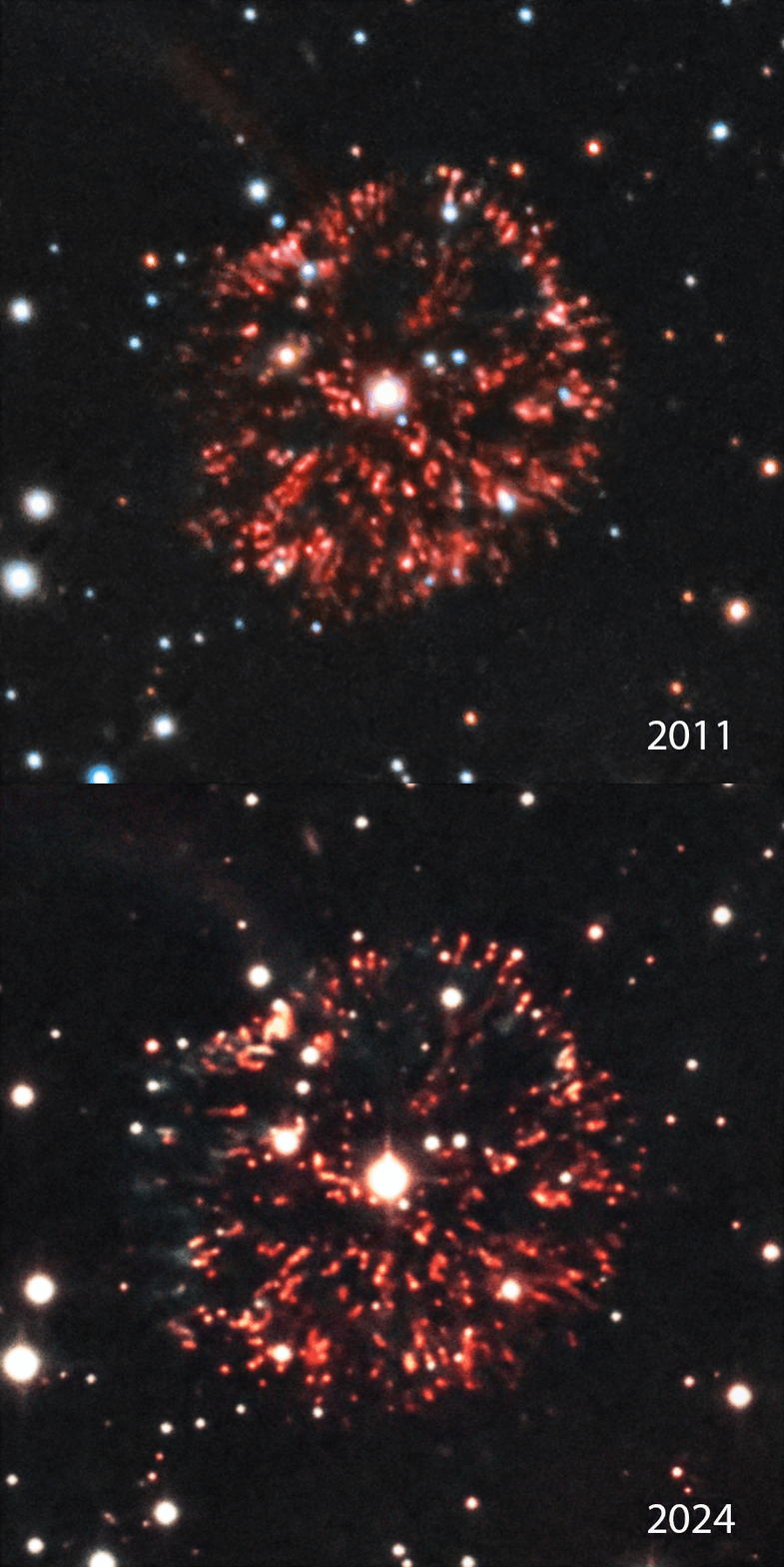
Blinking the croped center against an image done in 2011 by A. Block
|
(c) 2026 All astro photo images are copyrighted. They may not be used or reproduced without explicit written permission from the authors and Adam Block |
About this Image / Über dieses Bild
| CCD: | Omegon veTEC410c |
| Image Type, Orientation: | RGB-HaOIII Composite, North is at 12:00h |
| Exposure time: | RGB: 65x300s, HaOIII: 242x300s (25h35m total) |
| Exposure date: |
October 2024 |
| Location: | Capella Observatory at Skinakas, Crete/Greece, remote-controlled from Ireland during a Van trip |
| Filter: | RGB: Internal Bayer-Matrix, HA/OIII: STC Astro Duo-Narrowband Filter |
| Instrument: | Ganymed 60cm-Hypergraph in primary focus (f=1840 mm) |
| Photographer: | Josef Pöpsel, Stefan Binnewies, Frank Sackenheim |
|
Remarks: |
Nova shells
are rarely seen in the sky; the phenomenon is too short-lived, and they
vanish before long. The most prominent example is the highly fragmented
shell of the 1901 nova, which reached a maximum brightness of 0.2 mag
(nearly as bright as Capella). This shell, too, is rapidly fading, as our
animation from 2011 and 2024 shows. Incidentally, the 2011 image was taken
by
Adam Block using a 32-inch reflector telescope. |
|
Bemerkungen: |
Nova-Hüllen sind nur wenige am
Himmel zu finden, zu kurzlebig ist das Phänomen, dann sind sie auch schon
vergangen. Das prominenteste Beispiel ist da noch die sehr kleinteilig
strukturiere Hülle der im Maximum 0,2mag hellen Nova (fast
Capella-Helligkeit) von 1901. Auch diese Hülle verdünnt sich rasch, wie
unsere Animation aus den Jahren 2011 und 2024 zeigt. Das Bild aus dem Jahr
2011 stammt übrigens von
Adam Block, es wurde mit einem 32-Zoll-Reflektor
aufgenommen. |
Back to the Diffuse Nebulae Overview / Zurück zur Diffuse-Nebel-Übersichtsseite