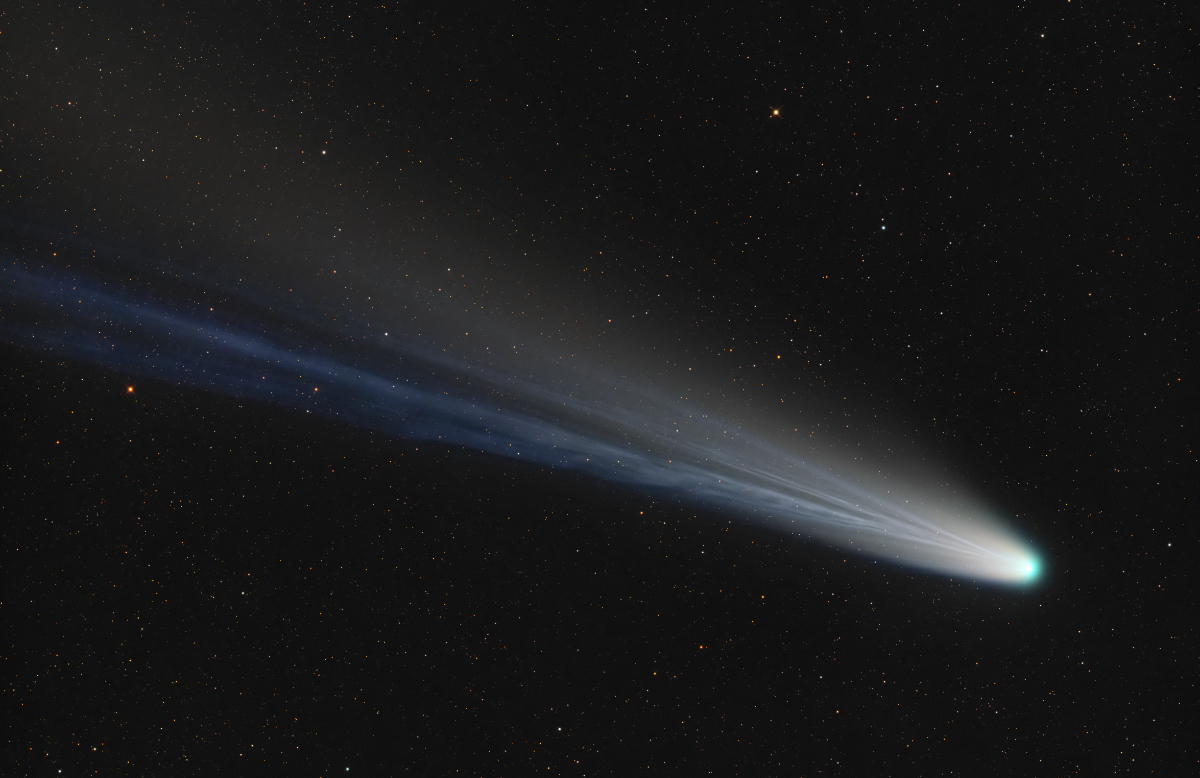
[back] C/2025 A6 (Lemmon)
November 11th 2025, f=1050mm
Bigger version / Größere Version (4700
x 3049 pixel)
|
(c) 2026 All astro photo images are copyrighted. They may not be used or reproduced without explicit written permission from the authors. |
|
300" |
|
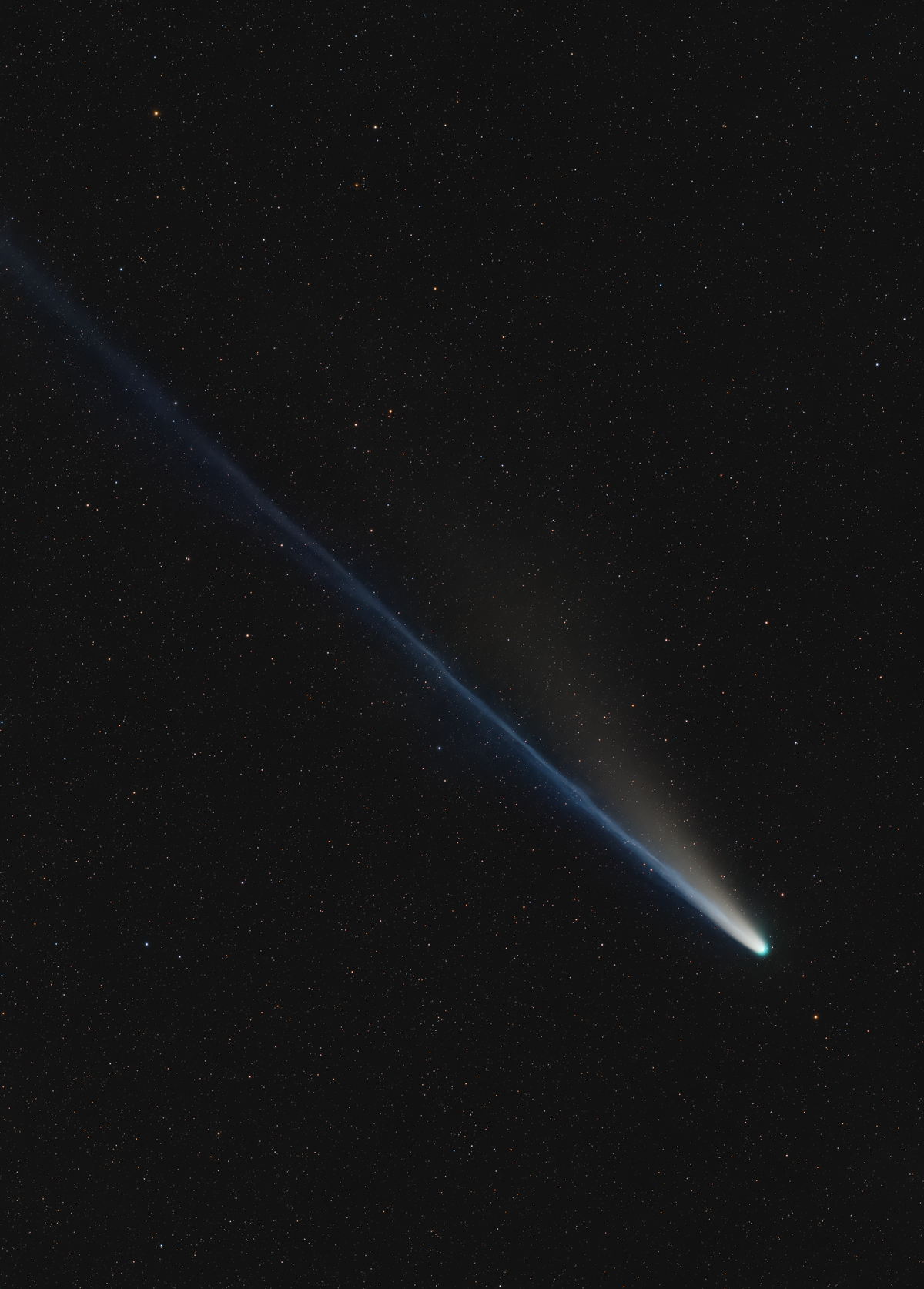
October 30th 2025, f=135mm
Bigger version / Größere Version (4003
x 5584 pixel)
|
(c) 2026 All astro photo images are copyrighted. They may not be used or reproduced without explicit written permission from the authors. |
|
0.5° |
|
About this Images / Über dieses Bilder
| Camera: | Upper Image:Moravian C3-PRO-61000 Mono CMOS Lower Image: , ASI 2600MC pro |
| Image Type, Orientation: | Upper Image: L-RGB composite, North is at 12:00 Lower Image: RGB OSC image, NORTH is at 12:00 |
| Exposure time/date: | Upper Image: November 11th 2025, L: 13x30 sec., R,G,B:
7x30s
(0:17h total) Lower Image: October 30th 2025, 25x60s OSC (0:25h total) |
| Location: | Upper Image: Capella Observatory South at
Kiripotib Astro Farm,
Namibia Lower Image: Private mobile observatory of Rainer in his backyard, Heroldsbach/Germany |
| Filter of upper image: | Astronomik Deep-Sky Deep-Sky RGB Filter plus 6nm SII, Ha, OIII filters on Moravian EFW-3L-9-II External Filter Wheel |
| Instrument: | Upper Image: "Rhea", a PlaneWave DeltaRho 350, 1050mm focal length,
350mm aperture,
f/3 on 10Micron GM2000 HPS II Combi Lower Image: Samyang 135 mm on iOptron SkyGuider Pro |
| Photographer: | Rainer Raupach, Josef Pöpsel, Stefan Binnewies, Frank Sackenheim |
|
Remarks: |
Comet C/2025 A6 (Lemmon) was
discovered in early 2025 and is a long-period comet. It will not return to
the inner Solar System for approximately 1,400 years. |
|
Bemerkungen: |
Der Komet C/2025 A6 (Lemmon) wurde Anfang 2025 entdeckt
und ist ein langperiodischer Komet. Er wird sich erst in etwa 1400 Jahren
wieder in Sonnennähe befinden. |
| References: | [1] Orbit data on TheSkyLive: https://theskylive.com/c2025a6-info |
Back to the Comet Overview / Zurück zur Kometen-Übersichtsseite